

AVI Implementation: 89 Manual Inspectors to 2 Machines
Sterile fill-finish manufacturer with large-scale GMP production
A sterile fill-finish facility ran 89 manual visual inspectors on a single production line. The question was not whether to automate, but how to validate the transition in a GMP environment without disrupting the inspection track record.
The challenge
The situation
The facility ran 89 trained manual visual inspectors on its fill-finish line, with full FTE cost, qualification overhead and scheduling complexity. The business case for automated visual inspection was clear, but the regulatory path required careful preparation: replacing manual inspection under GxP means demonstrating that the AVI system achieves at least equivalent detection performance through a formal probability-of-detection study, run against the manual reference standard before the line changes, with the system fully validated (EU GMP Annex 11; 21 CFR 211.68(b); 21 CFR 11.10(a)) before it can operate as the sole inspection method; GAMP 5 served as the guidance framework for the validation. Without this sequence, the validation package does not hold up under Annex 1 scrutiny.
Our approach
What we delivered
Defect library development: catalog of defect types, sizes and frequencies across the fill-finish output, structured as the reference standard for the probability-of-detection (PoD) study
Methodology validation (PoD study): detection study comparing AVI performance against manual inspection, structured to meet EU GMP Annex 1 requirements for AVI as a replacement for manual inspection
GAMP 5 computer validation: full validation lifecycle from URS through IQ/OQ/PQ, data integrity and audit trail under EU GMP Annex 11 and 21 CFR Part 11
Recipe development: definition and optimization of machine recipes across all product types on the line, reducing recipe setup time from 42 to 7 days
The outcome
Results & impact
EUR 4.2M annual savings
Full FTE cost reduction from 89 manual inspectors to 2 machine operators, including training, qualification and scheduling overhead.
ROI under 2 years
Capital investment recovered within less than two years, based on annual operating cost delta between manual and automated inspection.
Recipe time 42 to 7 days
Recipe development and qualification time reduced by 83 percent, accelerating product changeover and new product introduction.
Zero validation deviations at go-live
AVI system released with no open deviations and a complete GAMP 5 validation package, inspection-ready from day one.
In summary
The facility operates two AVI machines in place of 89 manual inspectors, with a validated inspection method that holds up under EU and FDA inspection. Annual savings of EUR 4.2M, ROI recovered in under two years, and recipe time reduced by 83 percent.
Regulations & standards considered
- EU GMP Annex 1 (Manufacture of Sterile Medicinal Products, Revision 2022, Sections 8.30-8.33)
- ISPE GAMP 5 (2nd Edition, 2022): A Risk-Based Approach to Compliant GxP Computerised Systems
- EU GMP Annex 11 (Computerised Systems, EudraLex Vol. 4)
- FDA 21 CFR Part 211.68 (Automatic, Mechanical, and Electronic Equipment)
Related expertise
Automated Visual Inspection →
AVI system selection, methodology validation and GAMP 5 computer validation
Annex 1 (Sterile Manufacturing) →
Requirements of the revised Annex 1 for AVI qualification and HVAC
Computer System Validation (CSV) →
GAMP 5 validation for GxP computerised systems including AVI software
Similar projects
More on Pharma →

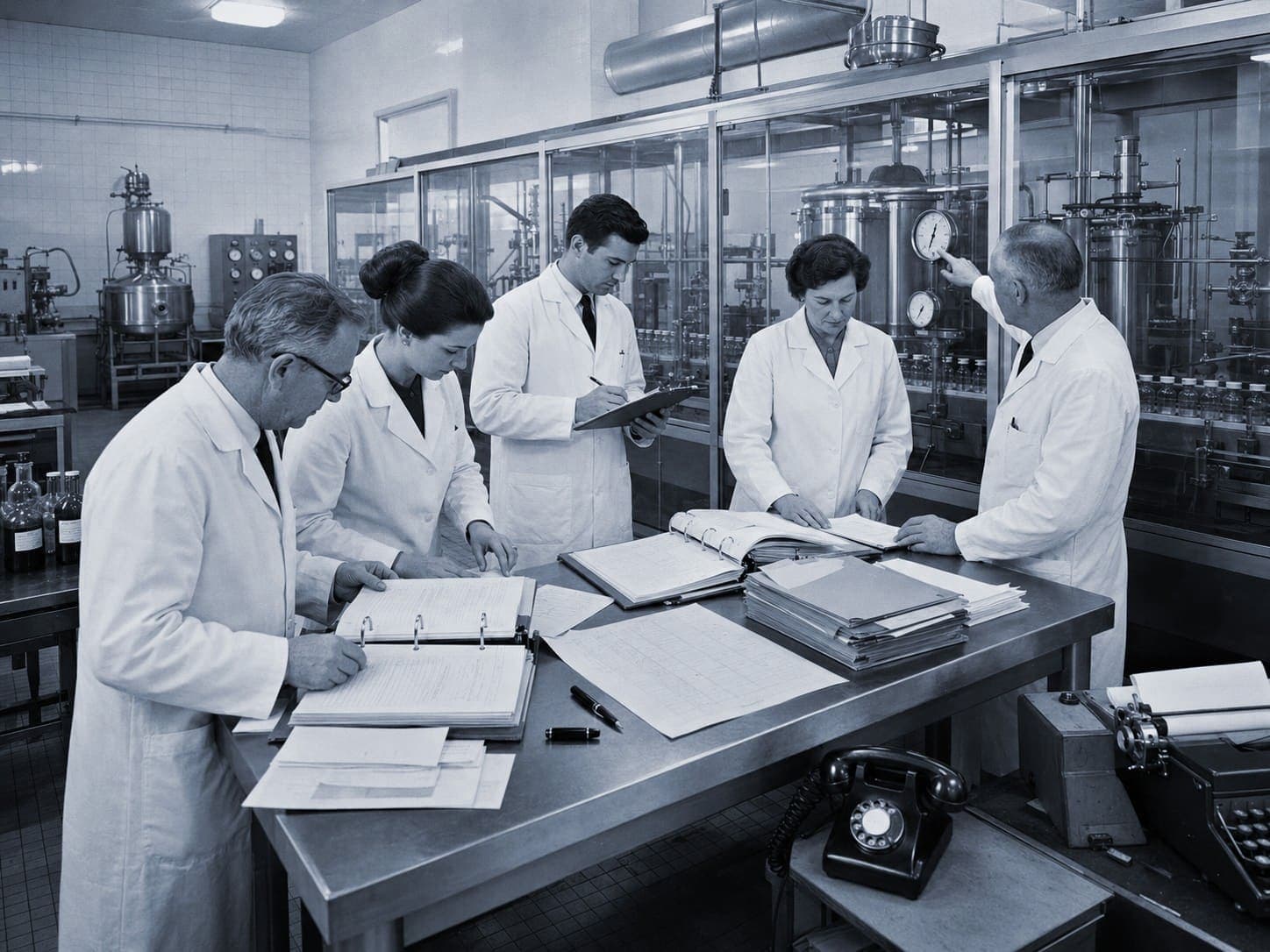
Image notice: The images on this page were generated using artificial intelligence. They do not depict real people, places, or events.
Sources
- EU GMP Annex 1: Manufacture of Sterile Medicinal Products (Revision 2022)
- ISPE GAMP 5, 2nd Edition (2022)
- EU GMP Annex 11: Computerised Systems (EudraLex Vol. 4)
- Entourage, avi-savings.theentourage.de (reference project, anonymized)
Your project
A comparable project?
Briefly outline your situation. We'll respond with an initial assessment, usually within one business day.
Prefer direct? +49 89 4161170-0
info@theentourage.us
- Reply usually within one working day
- 4 locations: DE · CH · IT · US
- 100% life sciences